- Safety Harnesses: Safety harnesses are worn by workers to prevent falls from elevated surfaces. They consist of straps, buckles, and connectors that secure the worker to an anchor point, distributing the force of a fall and minimizing the risk of injury.
- Fall Arrest Systems: Fall arrest systems are a combination of equipment, including harnesses, lanyards, and anchors, that work together to stop a fall in progress. They are designed to absorb the energy of a fall and prevent the worker from hitting the ground or lower level.
- Ladders: Ladders are portable and extendable devices used for accessing elevated areas. They come in various types, such as step ladders, extension ladders, and platform ladders, each suitable for different heights and tasks.
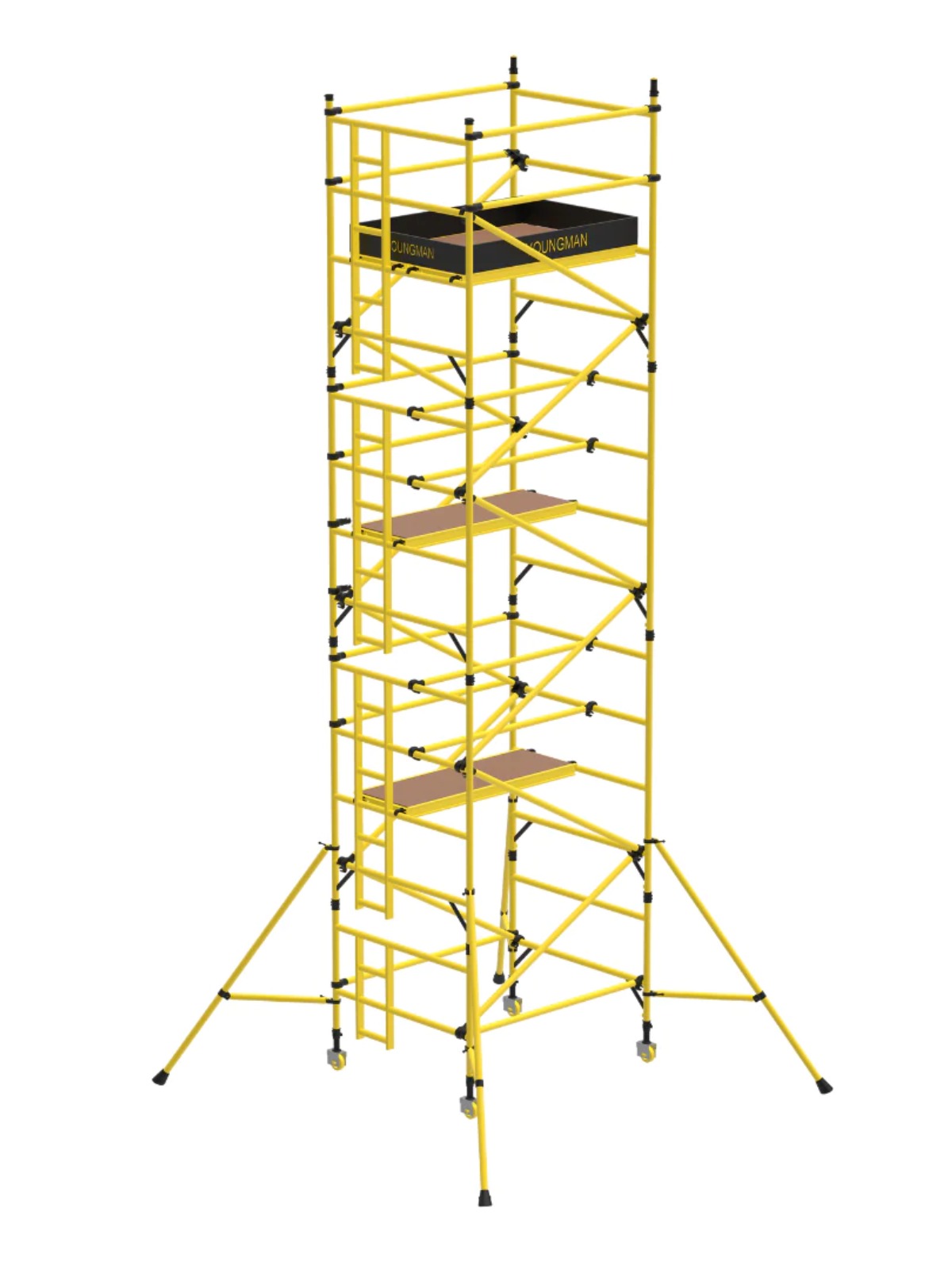
- Scaffolding: Scaffolding is a temporary structure erected to provide a platform for workers to perform tasks at elevated heights. It consists of platforms, braces, and guardrails to ensure stability and safety during construction, maintenance, or repair work.
- Aerial Lifts: Aerial lifts are mechanical devices used to lift workers to elevated areas. They include equipment like scissor lifts, boom lifts, and cherry pickers, allowing workers to access heights safely and efficiently.
- Rope Access Gear: Rope access equipment includes harnesses, ropes, descenders, and ascenders used by workers in industries like window cleaning, building maintenance, or industrial inspections. This equipment enables workers to navigate vertical surfaces with minimal impact on the surrounding environment.
- Personal Protective Equipment (PPE): PPE for high work includes hard hats, safety glasses, gloves, and non-slip footwear to protect workers from falling objects, debris, and other hazards associated with working at heights.
It's important to note that proper training and adherence to safety regulations are crucial when using high work equipment. Employers should ensure that workers are trained in the correct usage and maintenance of these tools to minimize the risk of accidents.